
Driving Successful Digital Check-Ins
It's March 2020, and Hyatt's revenue plummets 90% due to the COVID-19 pandemic. The workforce was reduced, and projects were shelved. The name of the game became "Self-service" and "Contactless" experiences. This brought a spotlight to improving the digital check-in experience for guests.


Role
Lead Product Designer
Industry
Hospitality
Challenge
88% of check-ins occurred at the front desk.
Operational inefficiencies
In-person check-ins are the primary driver of chargebacks.
In-person upsell conversions are lower and yield less net revenue due to staff bounties.
When an in-person upsell does occur, the revenue from that is lower due to the bounty the colleague receives for making the sale.
Barriers to a great guest experience
OTA Bookings: Guests who book via Online Travel Agencies (OTAs) are ineligible for digital check-in due to unknown identity.
Last-Minute Bookings: Loyalty members cannot utilize digital check-in if booking occurs within a 72-hour window.
Results
Our strategic focus on personalization and digital check-in led to quantifiable success across revenue, risk, and operations:
Revenue Growth
Incremental revenue from digital upsells increased by $7 million, driven by improved personalization models and a redesigned check-in experience.Risk Reduction
Implementation of ID verification reduced hotel chargebacks by 31%.Operational Efficiency
We saw a 23% increase in operational efficiencies. The higher rate of digital check-in completions provided crucial data for optimizing room assignments and distributing housekeeping efforts more effectively.
$7M
Revenue Growth
31%
Risk Reduction
23%
Operational Efficiency
Solution
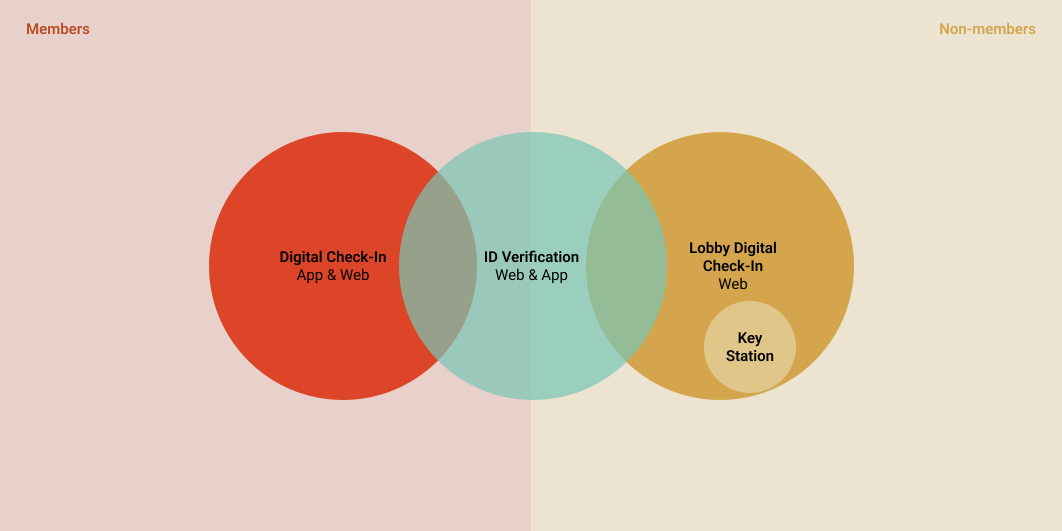
The outcome was to achieve more successful check-ins, which meant streamlining the current offering, integrating new technology, and offering non-members a way to check from the lobby.
Digital Check-In
Reduce friction and develop a sustainable pattern to add new features.
ID Verification
Reduce fraud and increase successful check-ins.
Lobby Digital Check-In
Equip non-members to skip the line and go straight-to-room.
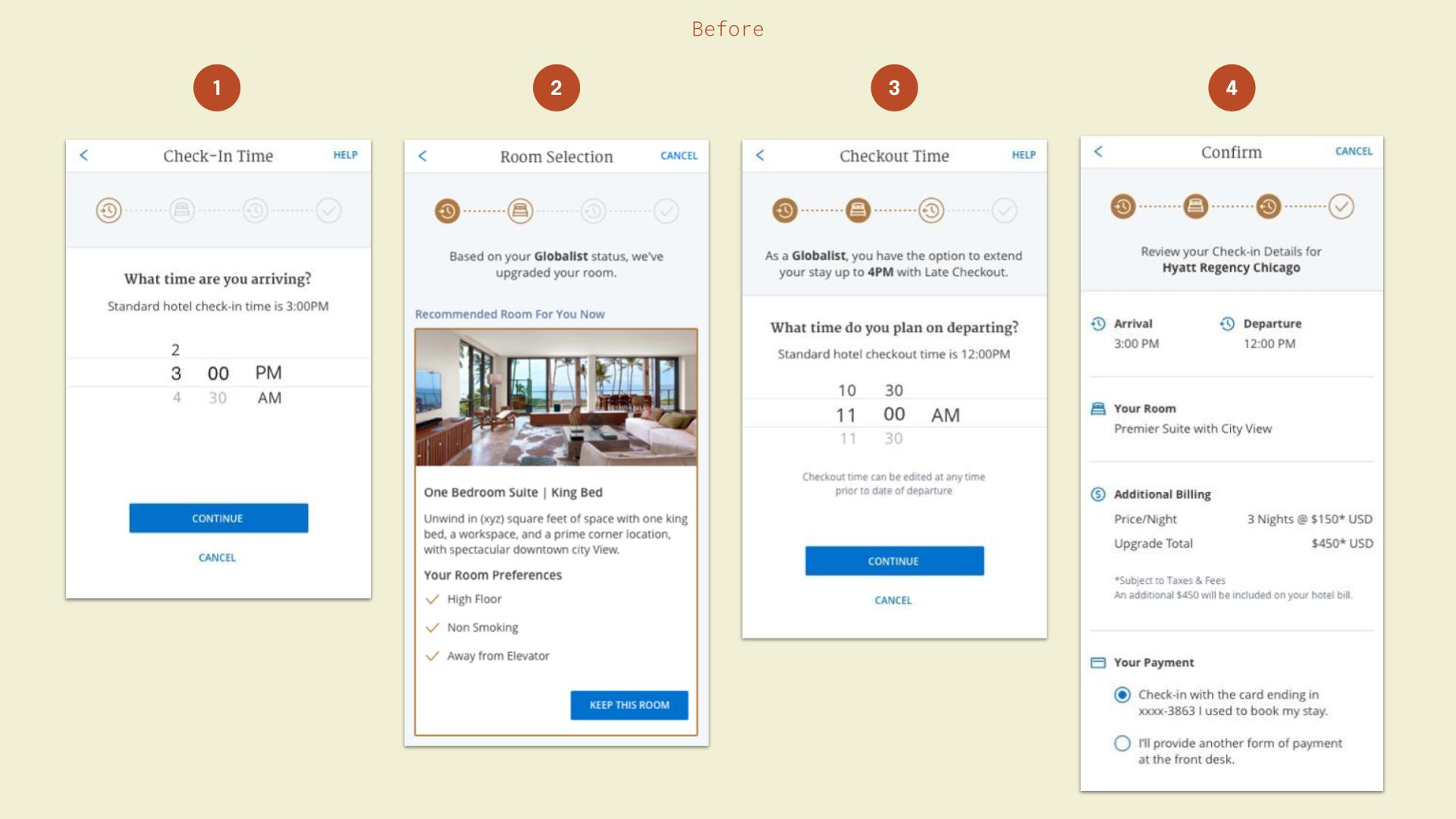
Before
The existing digital check-in was constrained by its 4-page structure and required a minimum of 4 clicks. This structure was not scalable; adding new features, such as housekeeping requests, would require expanding the required page count.
After
The digital check-in was streamlined from 4 pages to 1 page using two key strategies:
Progressive Disclosure
Leveraging defaults and user preferences to show only essential information upfront. Dedicated workflows were used only for specific needs, such as changing the check-in time.User Control
Providing guests with upfront room information and the choice and control to investigate further details if desired.
The redesign was built on a foundation of modern development and design best practices:
Technical Modernization (Web)
The old code base was replaced with reusable React components, simultaneously streamlining the user experience.Native-First Approach (Mobile)
Maximize the use of native components (fonts, icons, sheets) to ensure optimal support across all languages and operating systems. Branded fonts are reserved for emphasis, limiting their use in tactical or dynamic content.Familiar Patterns
Adoption of analogous checkout experiences and familiar design concepts to ensure intuitive use.Early Tracking
A core best practice was agreeing on tracking metrics from the start to measure success accurately.
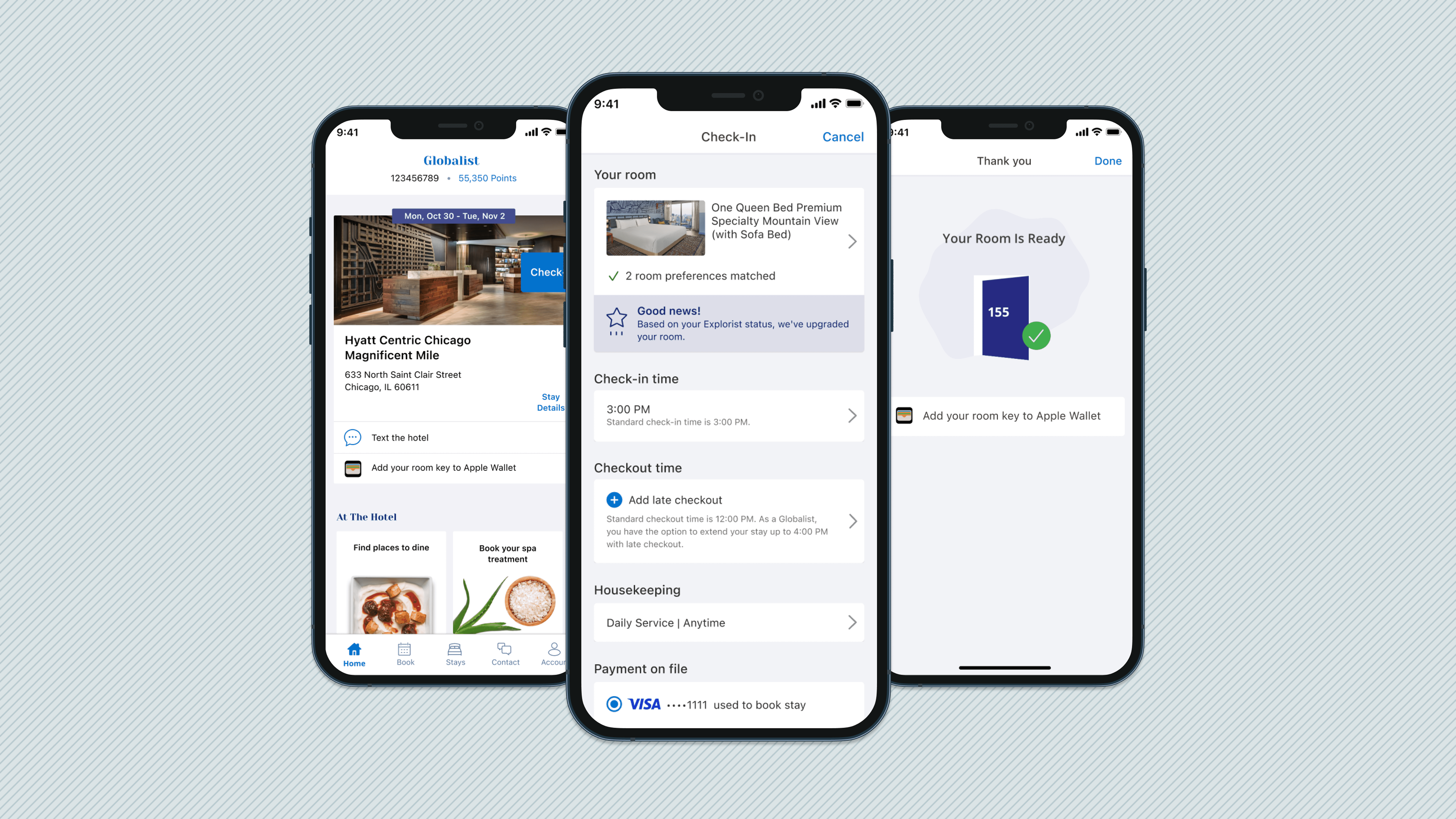
Native-first mobile interface leveraging system components (sheets and icons) for high performance and OS-level familiarity.
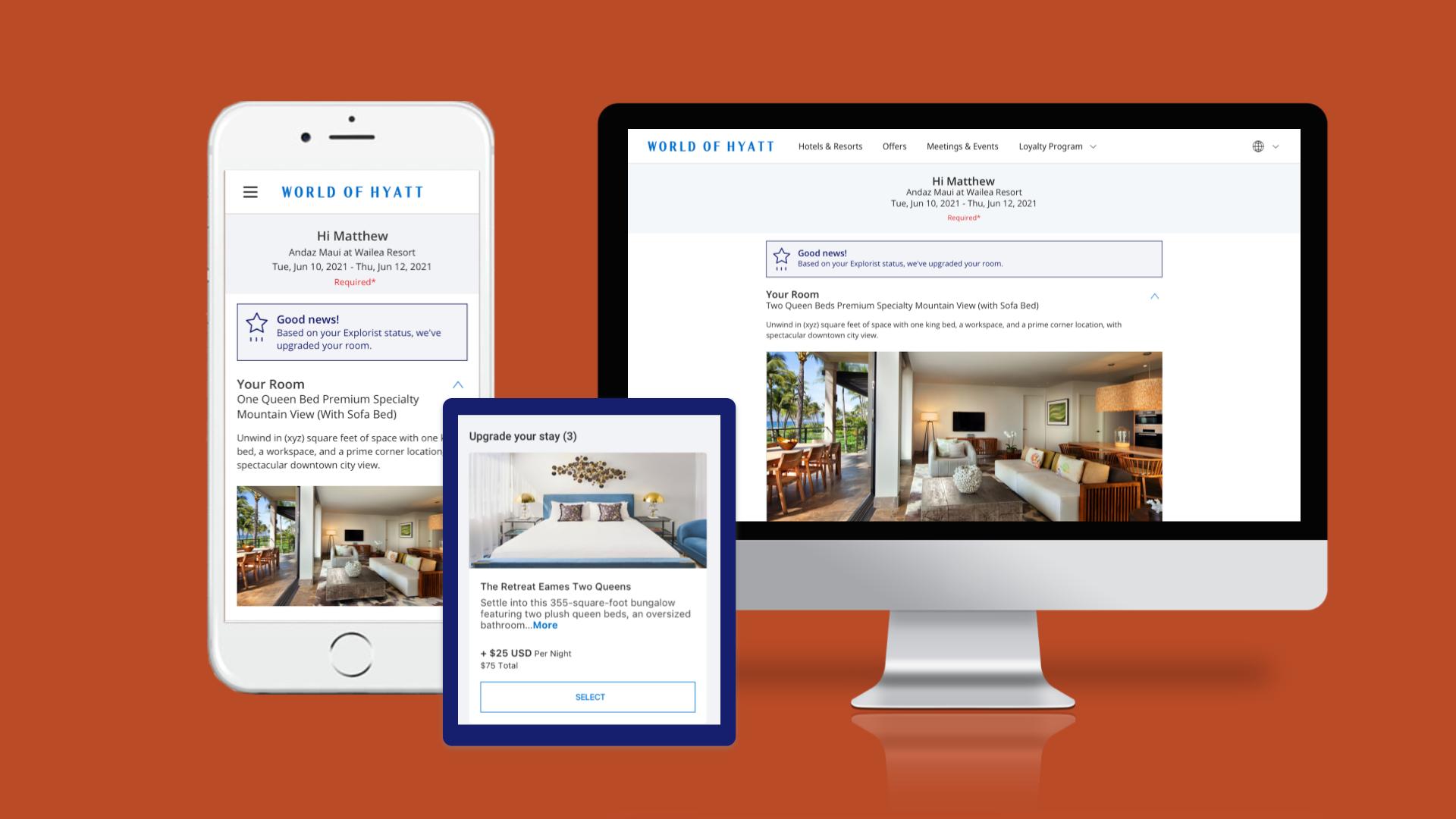
Transitioned from a 4-page legacy system to a modular React framework that ensures scalability and consistent UI patterns.
ID verification
Vendor Integration and Design
Net New Feature
We integrated a new vendor for ID verification, translating their technology into our digital ecosystem's look and feel.Accessibility & Inclusion
I addressed critical concerns regarding the technology's ability to detect a variety of skin tones and its fallback procedures. I also proposed changing the detection square's color scheme from red/green to red/blue to improve usability for individuals with color blindness.
Early User Testing & Content Strategy
Remote Testing Initiative
I advocated for early remote user testing to assess customer comfort and identify content gaps.Key Finding (Data Privacy)
While users trusted the feature due to Hyatt's credibility, they expressed significant anxiety about data usage and privacy.——————————————————————--
To address privacy concerns and enhance clarity:
Image Retention
Explicitly informed users that their images would not be retained.Security & Privacy FAQ
Replaced the vague "Learn more" link with a direct Security and Privacy FAQ section for immediate answers, improving user trust.Visual Clarity
Improved the visual design by clearly displaying accepted ID types, making the flow more engaging, and swapping the background for an easily adjustable vector image.

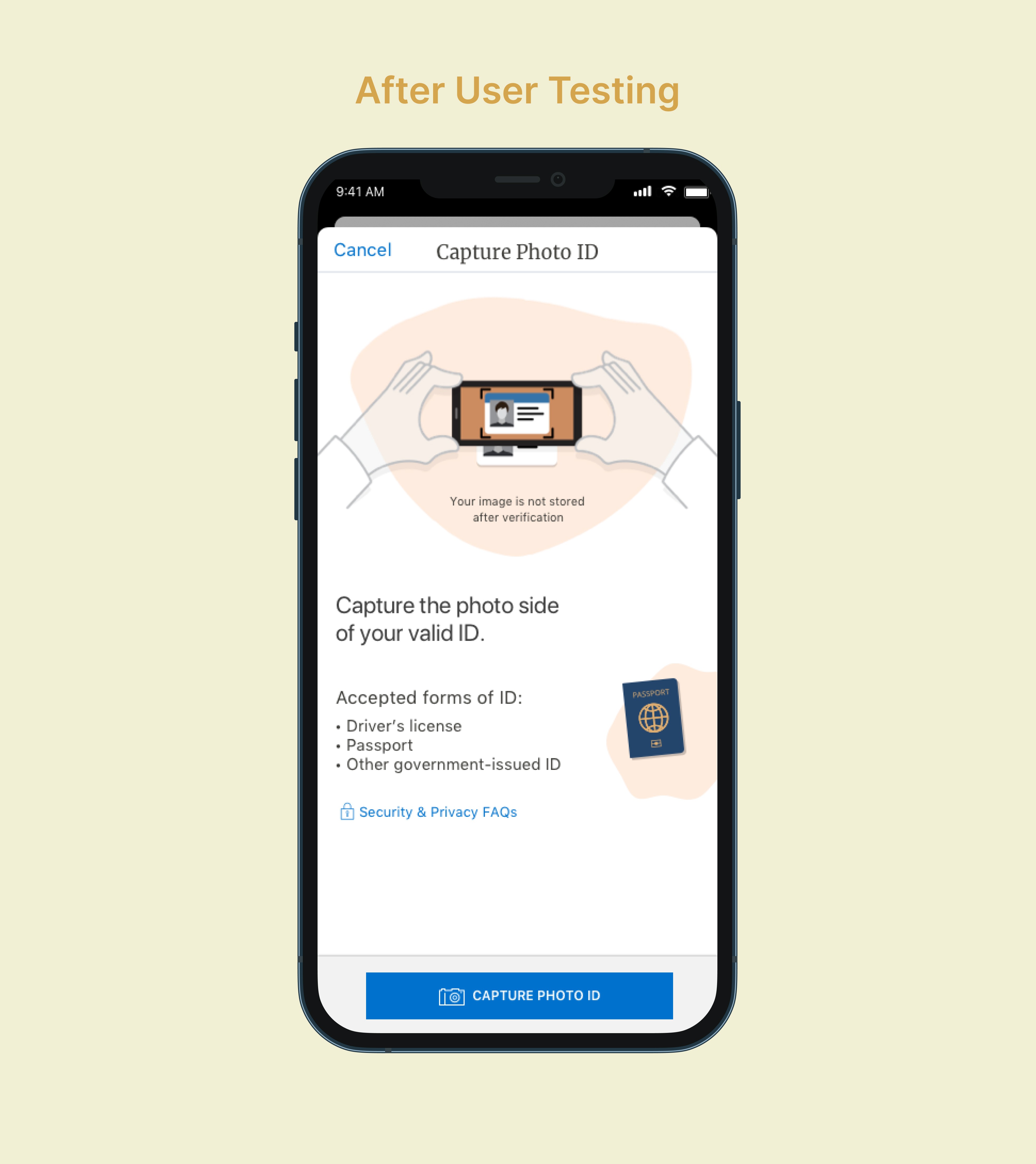
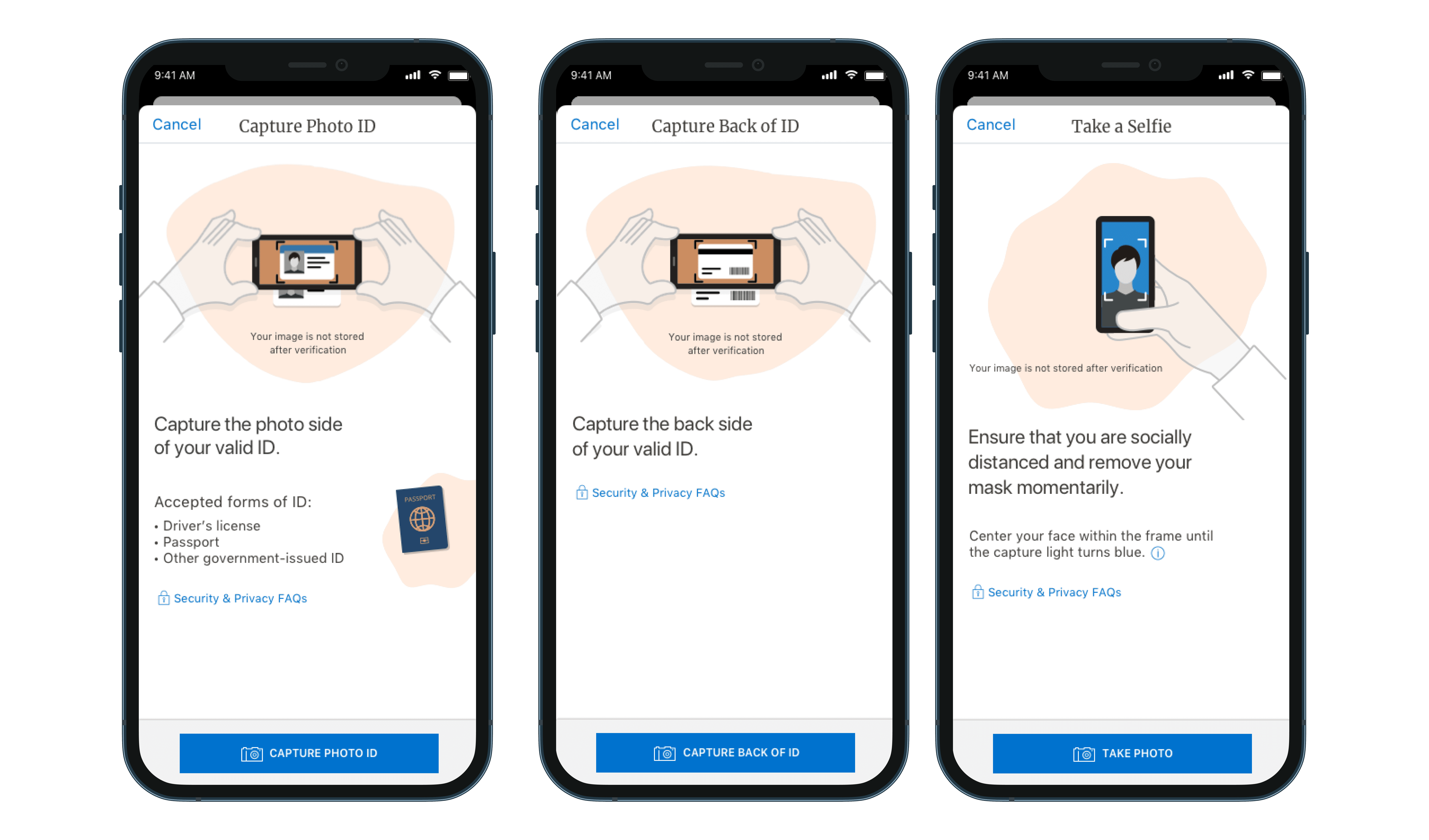
A 3-step ID verification utilizing native bottom sheets to maintain the check-in context. To account for a linear technical workflow where back-navigation wasn't possible, a persistent 'Cancel' option ensures user agency at every step.
ID verification failure and strategy pivot
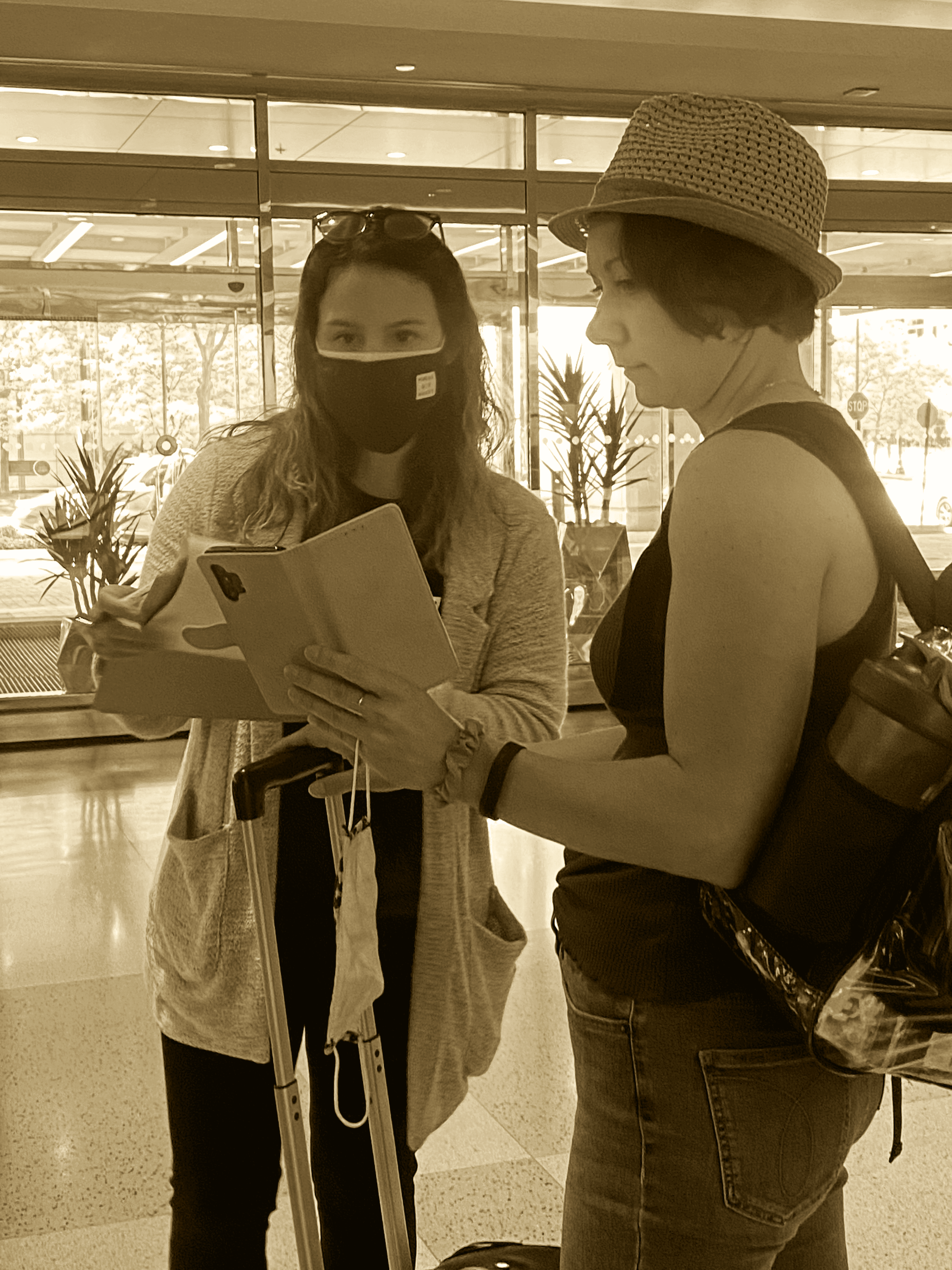
Initial Onsite Testing and Failure Analysis
Objective
Conducted intercept testing across various hotel locations to assess ID verification capabilities across different device types and OS versions.Methodology
Developed a detailed testing protocol, including customer waivers and structured interview guidelines.Result & Root Cause
The test resulted in an exceptionally high failure rate among almost every participant. The issue was traced back to an undocumented, required vendor update that was missed, rendering the initial integration unusable.
Strategic Vendor Pivot and Validation
Vendor Change
We quickly evaluated 3 alternative vendors.Rapid Colleague Stress Test
To quickly validate the new partner, we designed a comprehensive internal test involving 80 colleagues across multiple countries, skin tones, device types, and ID types. This provided a highly effective stress test in a minimum timeframe.Result
The testing yielded an 89% positive feedback rate, confirming the new vendor's reliability.
Design Impact
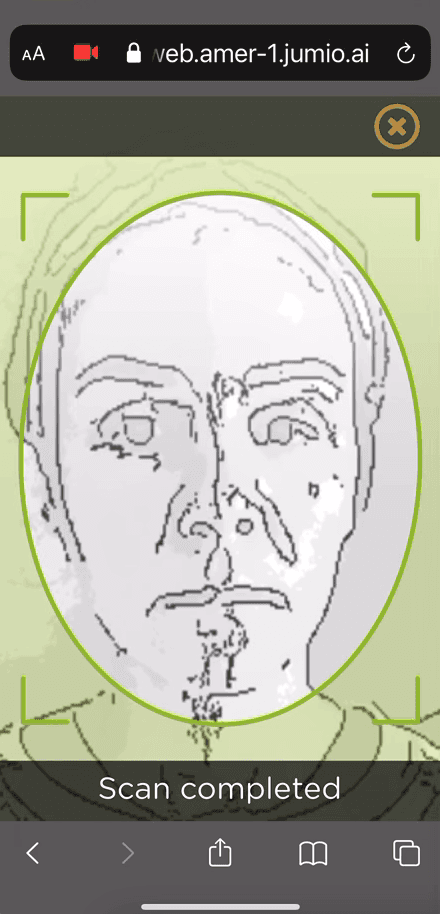
The positive integration of the new vendor led to a significant change in the user experience. The carefully designed custom screens for ID verification were deprecated, as the new integration requires guests to complete the entire verification process within the vendor's native platform.
Lobby Digital Check-In
Guests booking via Online Travel Agencies (OTAs) are digitally invisible to Hyatt. Because their data is siloed with third parties, they cannot use the mobile app, forcing a 100% reliance on front-desk check-ins.
Key Pain Points
• Operational Inefficiency
Hotels cannot predict arrival times which affects housekeeping schedules and room readiness.
• Revenue Loss
Missed opportunities for digital upsells
• Lobby Congestion
Desk check-ins during peak hours can lower guest satisfaction scores.
The Solution: QR-Code Entry Point
Bypassing the Line
To reduce friction, we implemented physical signage in high-traffic lobby areas inviting guests to bypass the front desk by scanning a QR code.Streamlined Entry
This scan immediately launches a dedicated web-based check-in flow, starting with a Welcome screen that allows guests to initiate self-service without requiring a direct Hyatt booking or app download.Key Station
Once the room is ready, guests can you use a QR code to activate key cards and go straight to room.
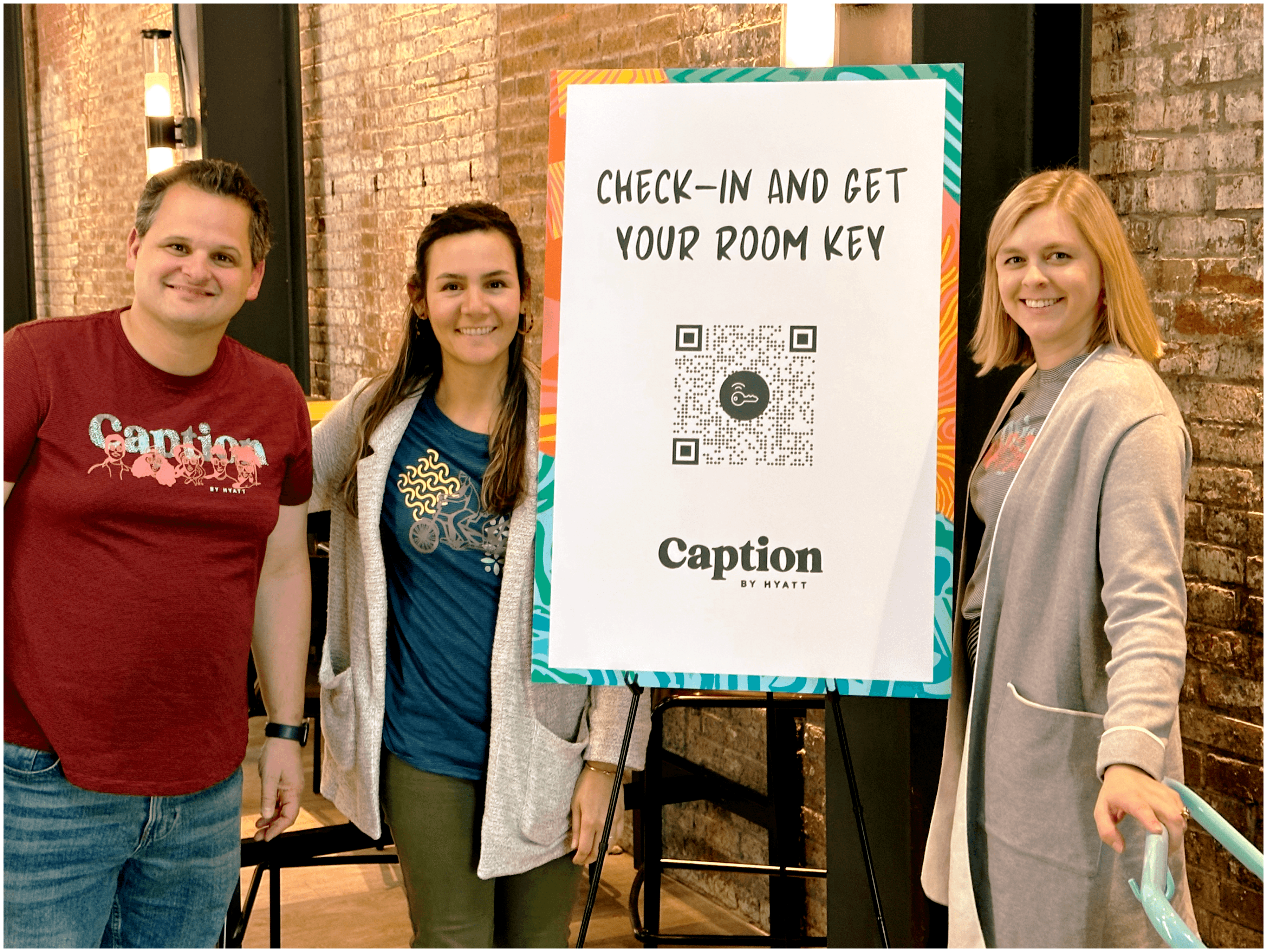
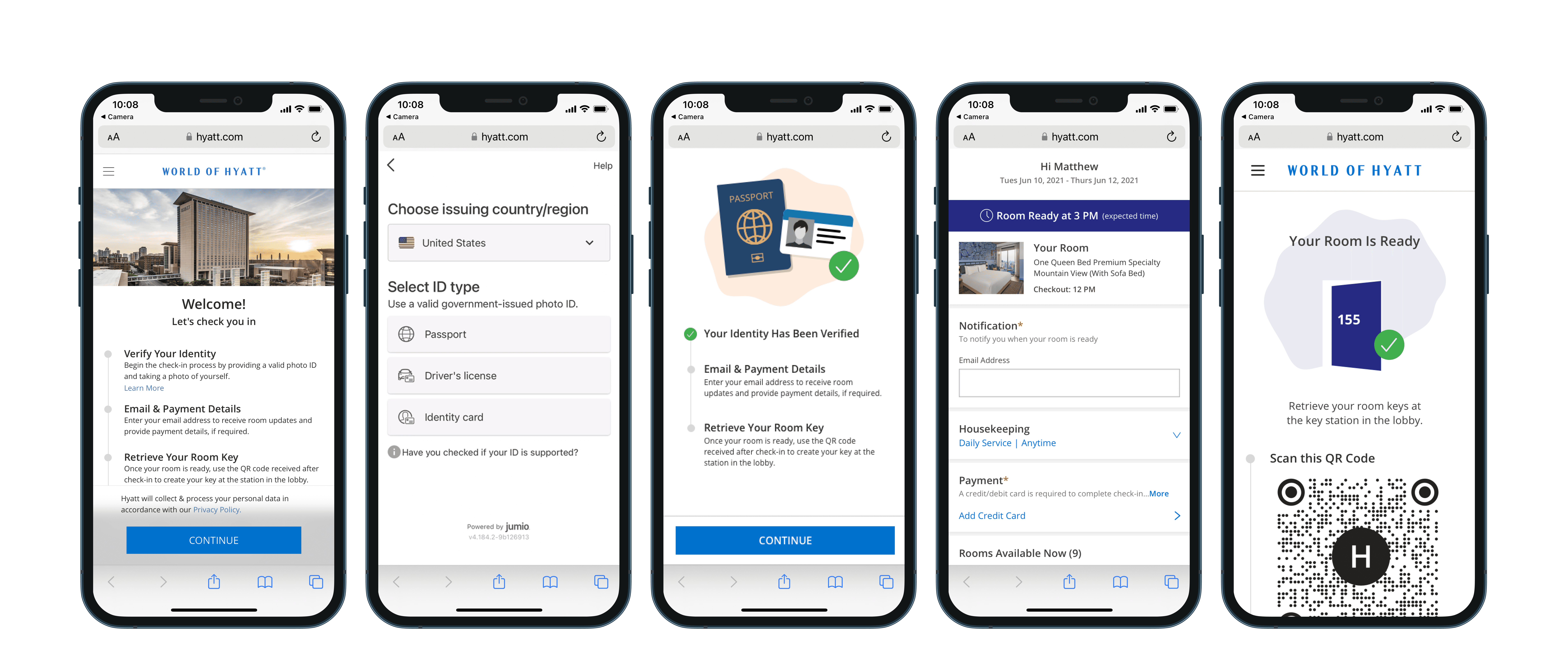
A web-based flow triggered via QR code that anchors the experience in ID verification. This streamlined transition culminates in a digital-to-physical handoff, providing guests with a QR code for seamless key card pickup at the lobby key station.
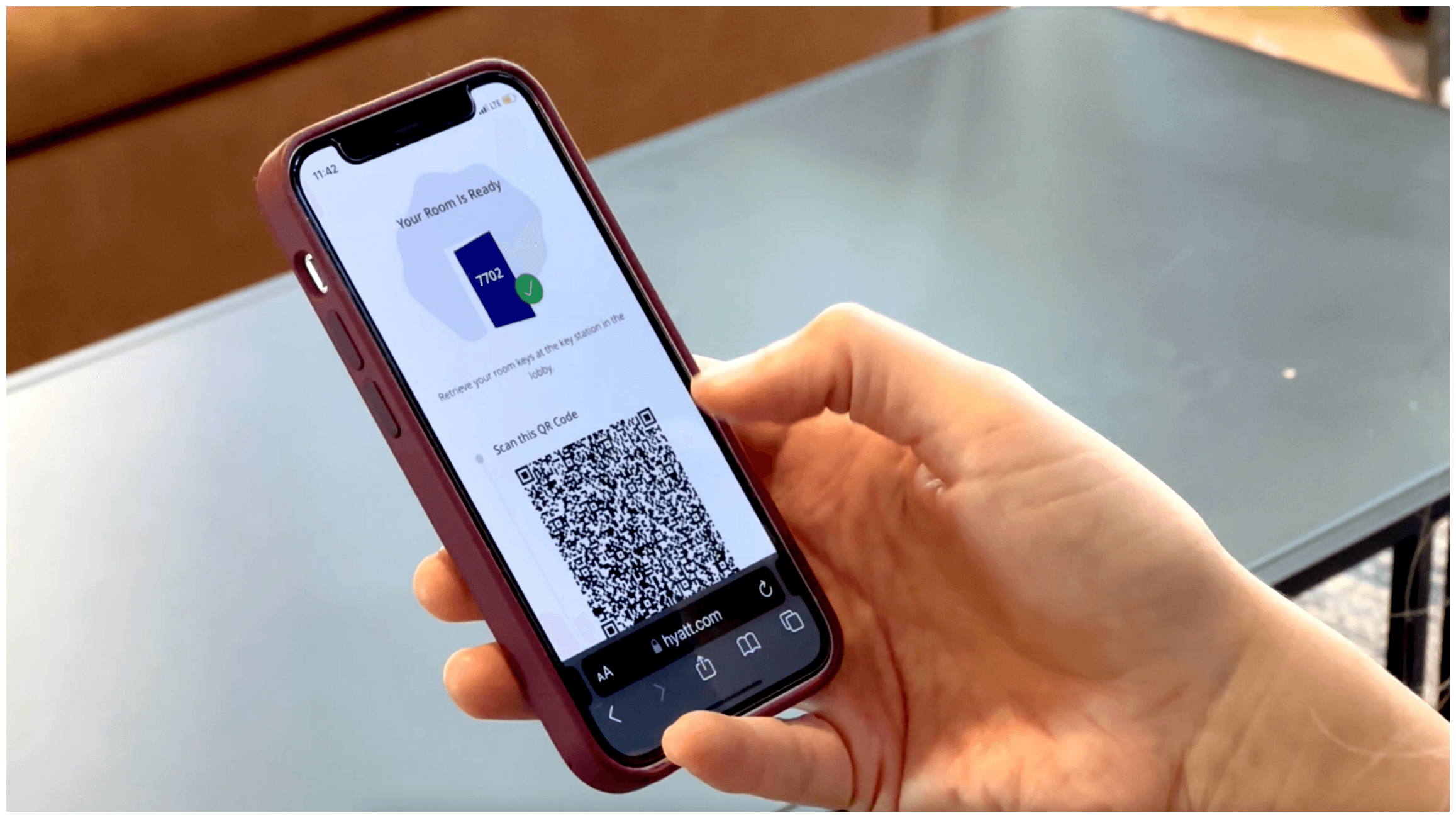
When the room is ready, scan the QR code at the key station.
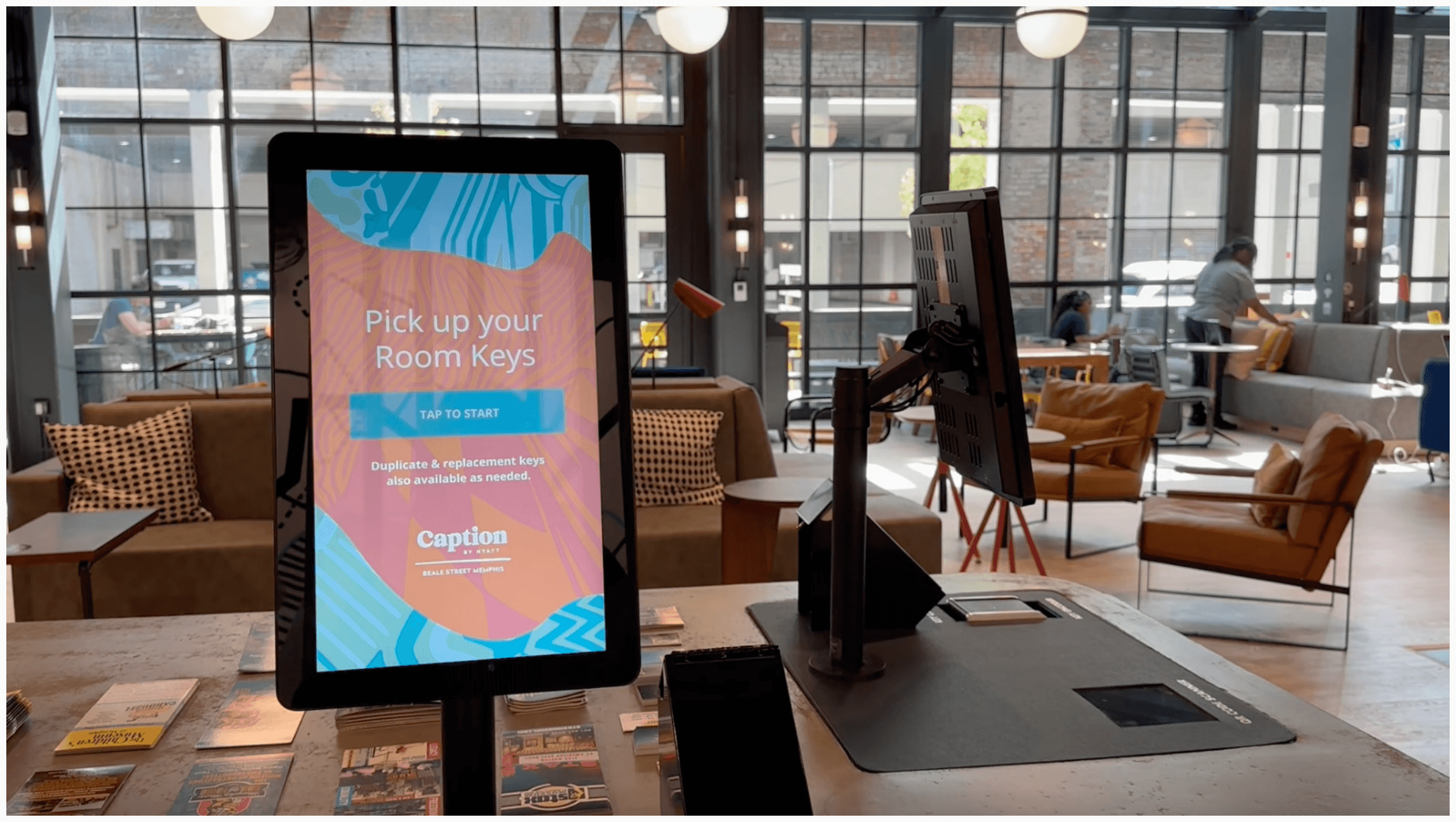
Tap to get started at the key station.
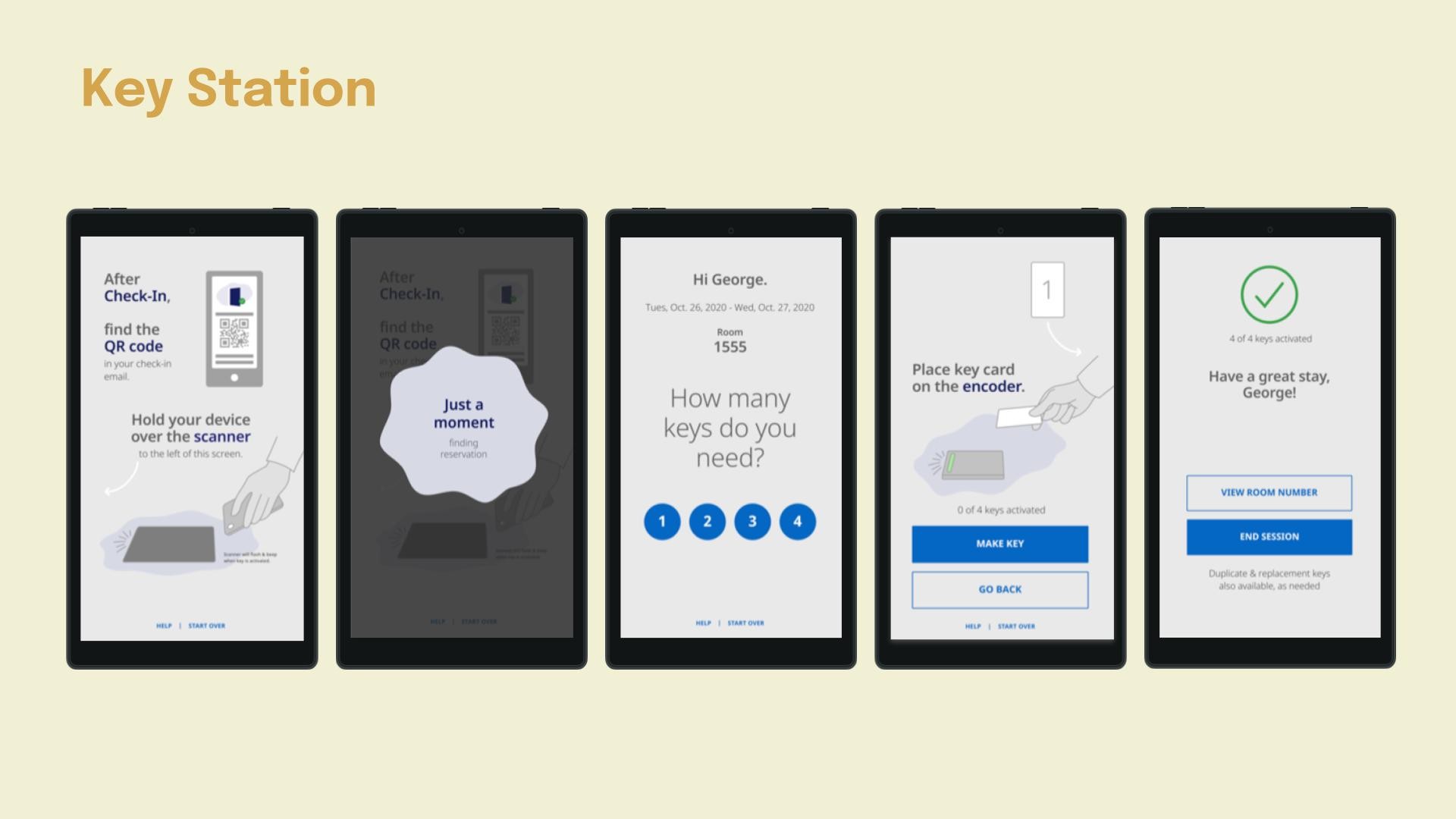
An intuitive self-service flow for scanning reservations, selecting keycard quantities, and heading straight to the hotel room.
Takeaways
I am grateful for my product and engineering counterparts on this project. Digital Check-In was successful due to the trust and collaboration we fostered within the entire sprint team during a traumatic moment in history.
Results
• Reduced fraud and identity chargebacks by 31%
• Minimized revenue leakage in non-digital channels, resulting in $7M in incremental revenue YoY
• Increased operational efficiency by 23%
• Reduced loyalty friction for members booking within a 72-hour window