

The Pivot to Wireless IFE
In a rapidly changing market influenced by the rise of Netflix and Delta's "Free Wi-Fi" initiative, I led a strategic discovery project to redefine Gogo's In-Flight Entertainment (IFE) roadmap. By combining in-depth qualitative research from passengers and crew with industry trend analysis, I facilitated executive-level workshops that shifted the company’s product strategy.
This effort resulted in the investment and launch of Gogo Vision Touch©—a lightweight, wireless seatback system that significantly reduced airline fuel costs while enhancing the passenger experience.
Role
Senior UX Designer (Strategy & Research)
Industry
Aviation
Methods
Value Proposition Canvas, Business Model Canvas, Stakeholder Facilitation, Storyboarding
The Challenge
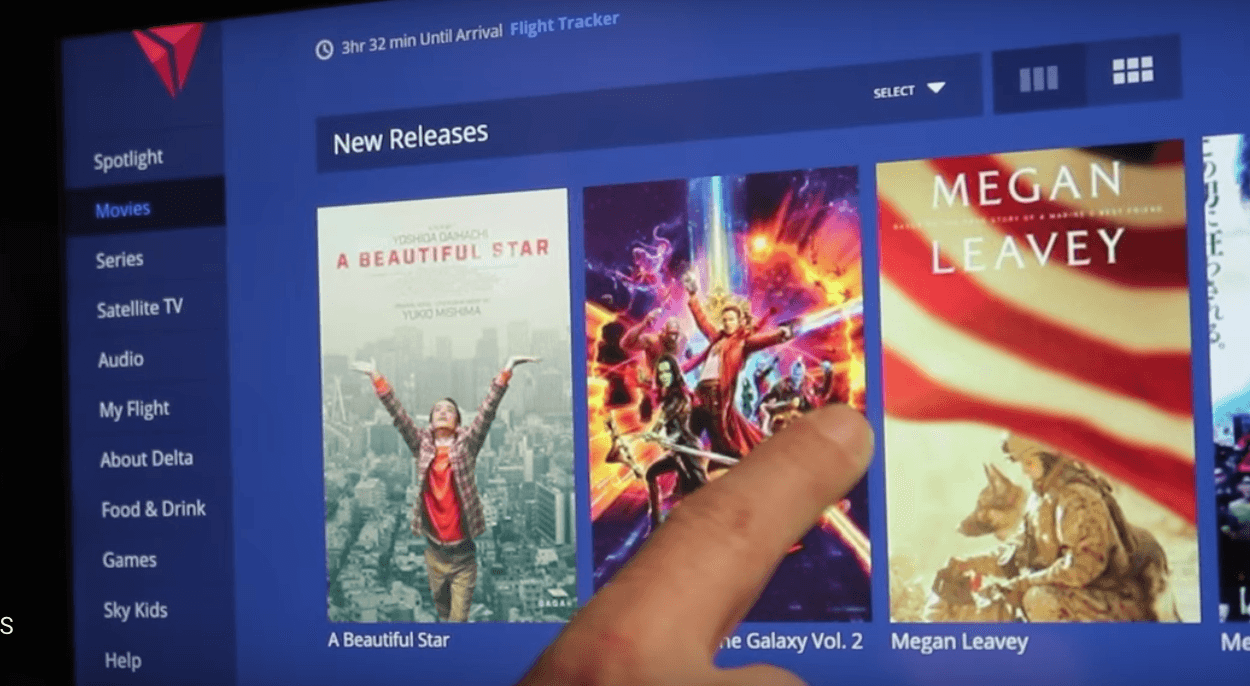
In 2015, Gogo faced a market pivot point. With the rollout of satellite Wi-Fi and the rise of streaming services like Netflix, passenger expectations were shifting rapidly. Simultaneously, key partners such as Delta were moving toward a "Free Wi-Fi" model. Gogo needed to identify its next strategic product bet to stay relevant in the long-haul market.
My Role
I spearheaded the strategic definition phase, combining qualitative research (interviews with passengers and flight attendants) with industry trend analysis. I facilitated leadership workshops using the Business Model Canvas to align stakeholders on IFE's future.
The Outcome | Gogo Vision Touch©
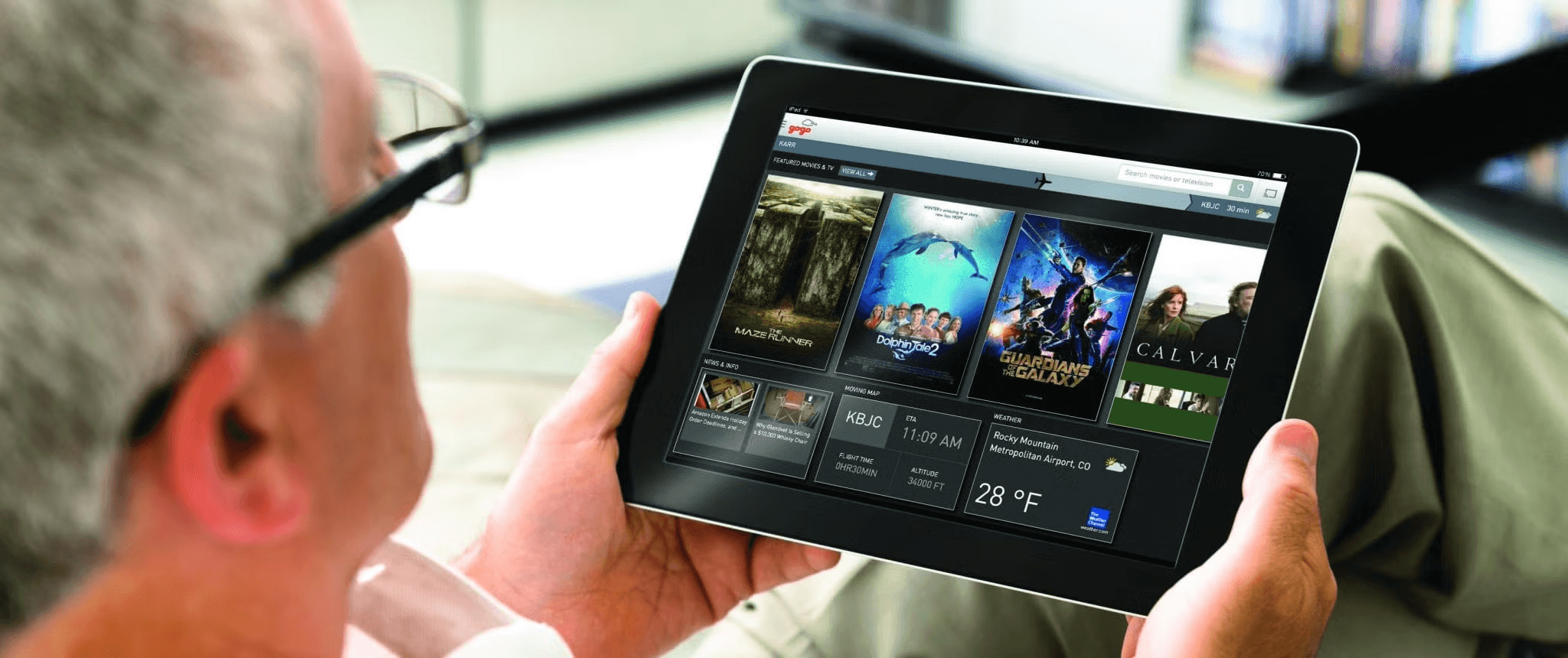
The strategy sessions resulted in the development and launch of Gogo Vision Touch©, a wireless seatback system.
Operational Impact - Airline
The system eliminated heavy wiring associated with traditional IFE, significantly reducing aircraft weight and fuel costs while simplifying maintenance.
Future Vision - Passenger Experience (PAX)
Benchmarking against high-end concepts like Panasonic's Waterfront, I produced storyboards visualizing an ecosystem where this wireless system would enable passengers to seamlessly pair personal devices for productivity and control their entire seat environment.
Phase 1, The Discovery Triad
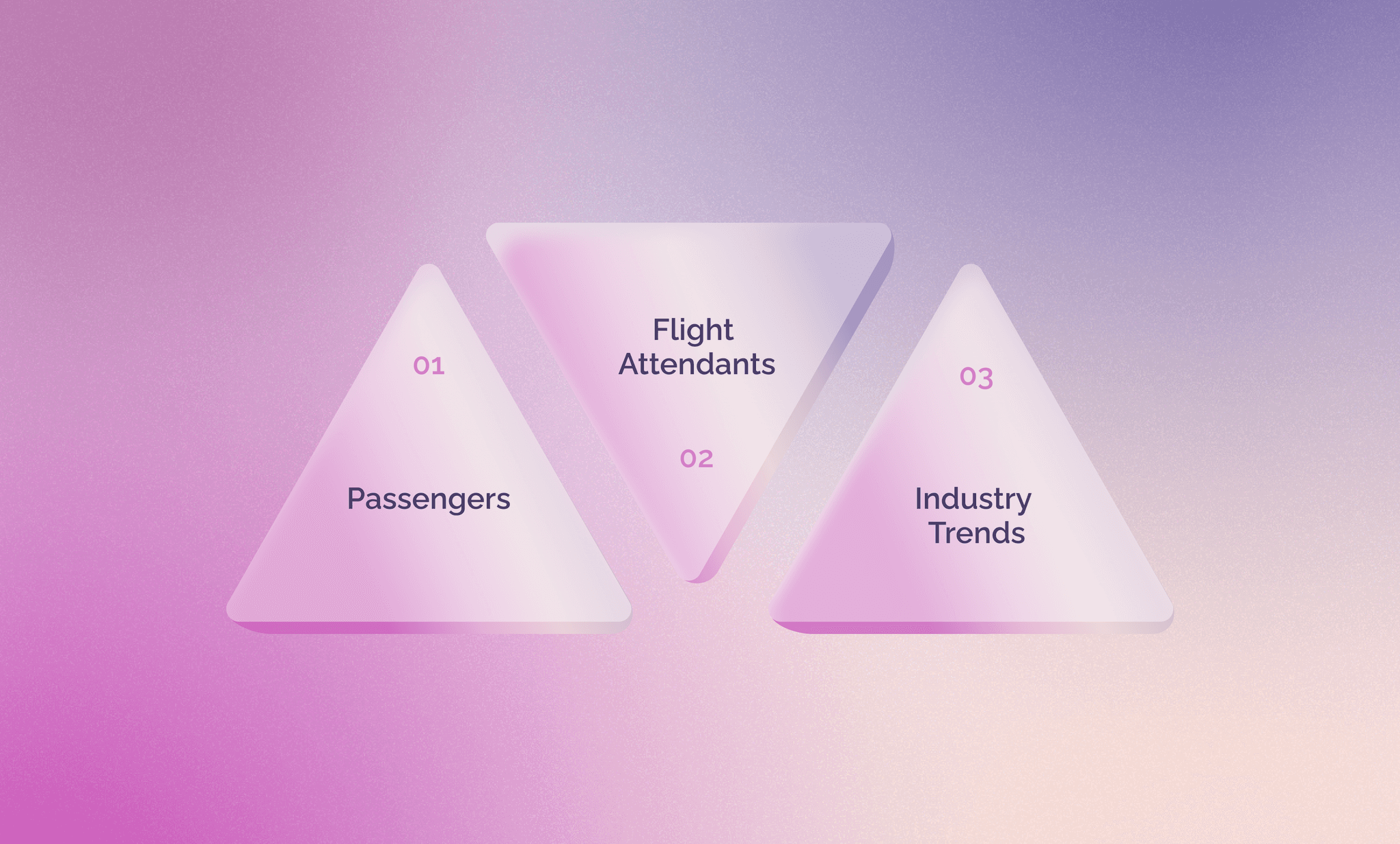
To define the product direction, I triangulated data from three key sources to balance passenger aspirations with operational realities.
1. Premium Passengers
Craved "seamless productivity"—the ability to edit documents and manage their environment rather than just passively consuming media.
2. Flight Attendants
Revealed that legacy wired systems were a primary pain point—heavy, prone to hardware failure, and difficult to troubleshoot mid-flight.
3. Industry Trends indicated a massive shift toward "second screen" behavior, where users multitask across devices.
Passenger Insights Reveal "The Activity Plan"
Strategic Flying
Through 10 deep-dive interviews and broader surveys, I discovered that frequent flyers don't just "sit" on a plane; they execute a premeditated Activity Plan. Their behavior is dictated by three factors:
Time Zone Management: Strategic sleeping to avoid jet lag.
Flight Duration: Short-haul is "mood-based," while long-haul is "schedule-based."
Connectivity Window: Planning high-focus work around when the internet is available.
The "Seatback vs. PED" Paradox
There is a tension between the convenience of the seatback and the power of Personal Electronic Devices (PEDs):
The Pro-Seatback Argument: It offers "commitment-free" interaction. Passengers value not having to download content beforehand or worry about battery life and ergonomic placement.
The Anti-Seatback Argument: Content is often perceived as "old" or a "waste of time." Furthermore, a significant mental model friction exists: Surprisingly, many passengers mistakenly believe they must purchase Wi-Fi to use the free seatback entertainment.
The Business Traveler, the Key Opportunity
My research highlighted a massive revenue disconnect.
While Economy makes up 82% of the market, Business Class accounts for 55% of total revenue. This validated our focus on "Productivity Tools" for the high-value traveler.
“ I plan what I am doing around when the internet will be available. ”
~ Premium Passenger
To bridge the gap between passenger intent and the hardware provided, I proposed three focus areas:
Multitasking Support: Moving away from a "full-screen movie" UI to one that allows passengers to track their "Activity Plan" (e.g., a "time-to-destination" widget visible while working).
Contextual Education: Clearly decoupling "Entertainment" from "Internet Purchase" in the UI to increase engagement.
Space & Privacy: Designing for the "Office in the Sky," utilizing the seatback as a secondary monitor or a control hub for the business-class environment.
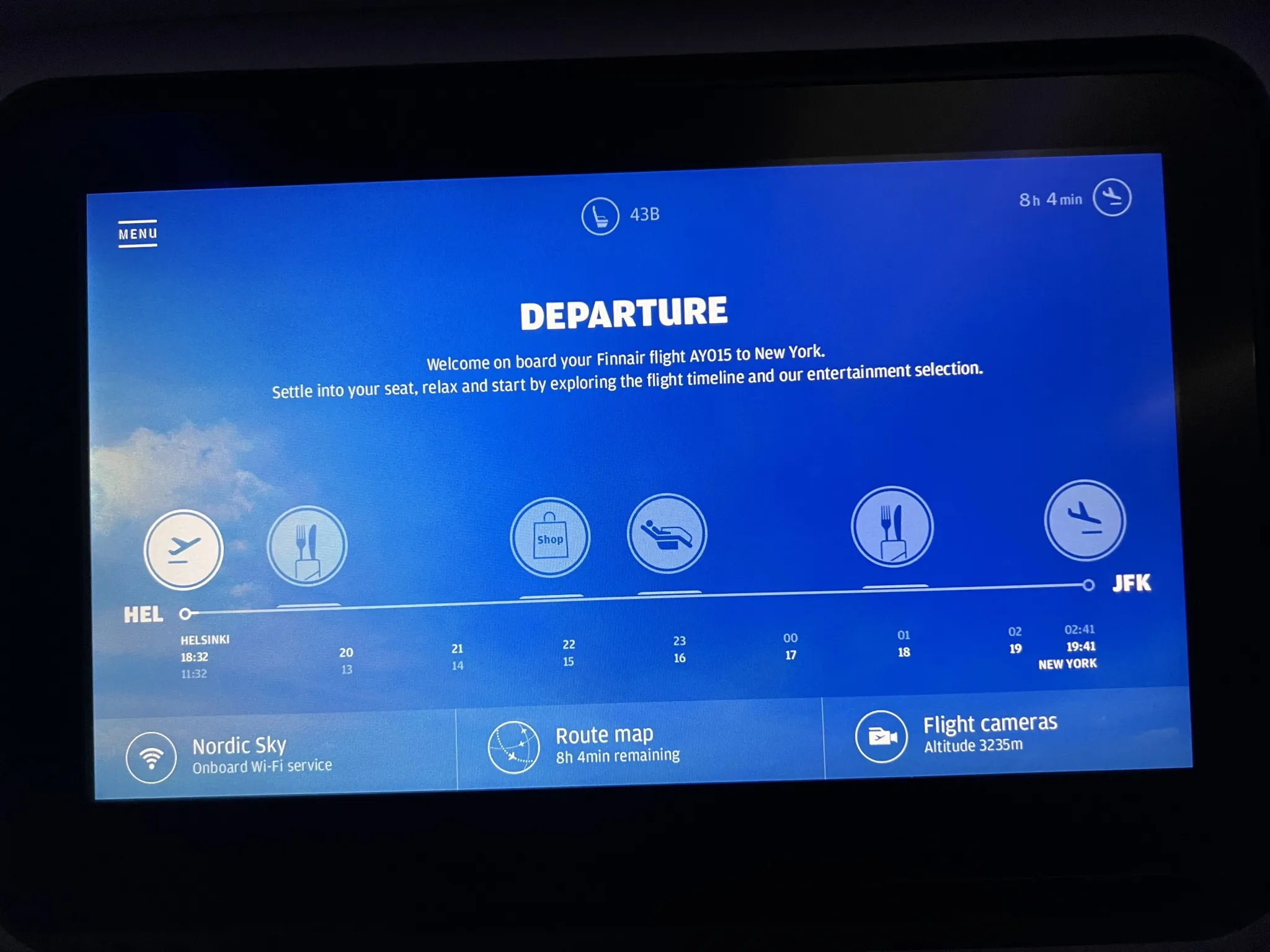
Reducing Passenger Anxiety through Predictability: By visualizing the flight timeline and meal intervals, Finnair empowers passengers to plan their work and rest cycles—a key "Premium" expectation identified in our discovery phase. I leveraged this benchmark to show how Gogo’s wireless ecosystem could deliver this level of transparency while bypassing the weight and cost of legacy wired hardware.
The Flight Attendant Lens, Shifting to Integration
Through interviews with Flight Attendants (FAs), I learned that they increasingly rely on a central Cabin Management System (CMS) as a "one-stop shop" to control lighting, safety briefings, and the IFE system.
The Pre-Flight Workflow (Critical Path) The IFE boot-up is the very first task upon boarding—often before power is even fully established.
Step 1: Board Aircraft
Step 2: Power on CMS & IFE
Step 3: Input Departure/Destination (Syncs Moving Map)
Why this matters: This workflow is a race against the clock. If the system fails, tech support must be called immediately to avoid delaying takeoff.
3 Key Pain Points for Crew Efficiency
System Latency & Anxiety: Legacy systems take 10+ minutes to boot. If the system isn't ready by boarding, FAs are forced to perform manual safety demos, adding stress to the departure timeline.
Lack of Granular Control: FAs often cannot reset a specific passenger's frozen screen without rebooting a whole section (or the entire plane). This creates a "blast radius" of disruption for other passengers.
Ergonomic & Hardware Failures:
Phantom Calls: Call buttons positioned near passengers' legs can be accidentally pressed.
Blind Spots: Galley lights often indicate a call was made but fail to pinpoint the specific seat, forcing FAs to "hunt" for the passenger.
Recommendations to solve these operational hurdles
Passenger Autonomy: Reducing reliance on crew for basic troubleshooting.
Integrated Control: Merging IFE controls (music, safety video, lighting) into a responsive, granular interface that allows FAs to target specific seats.
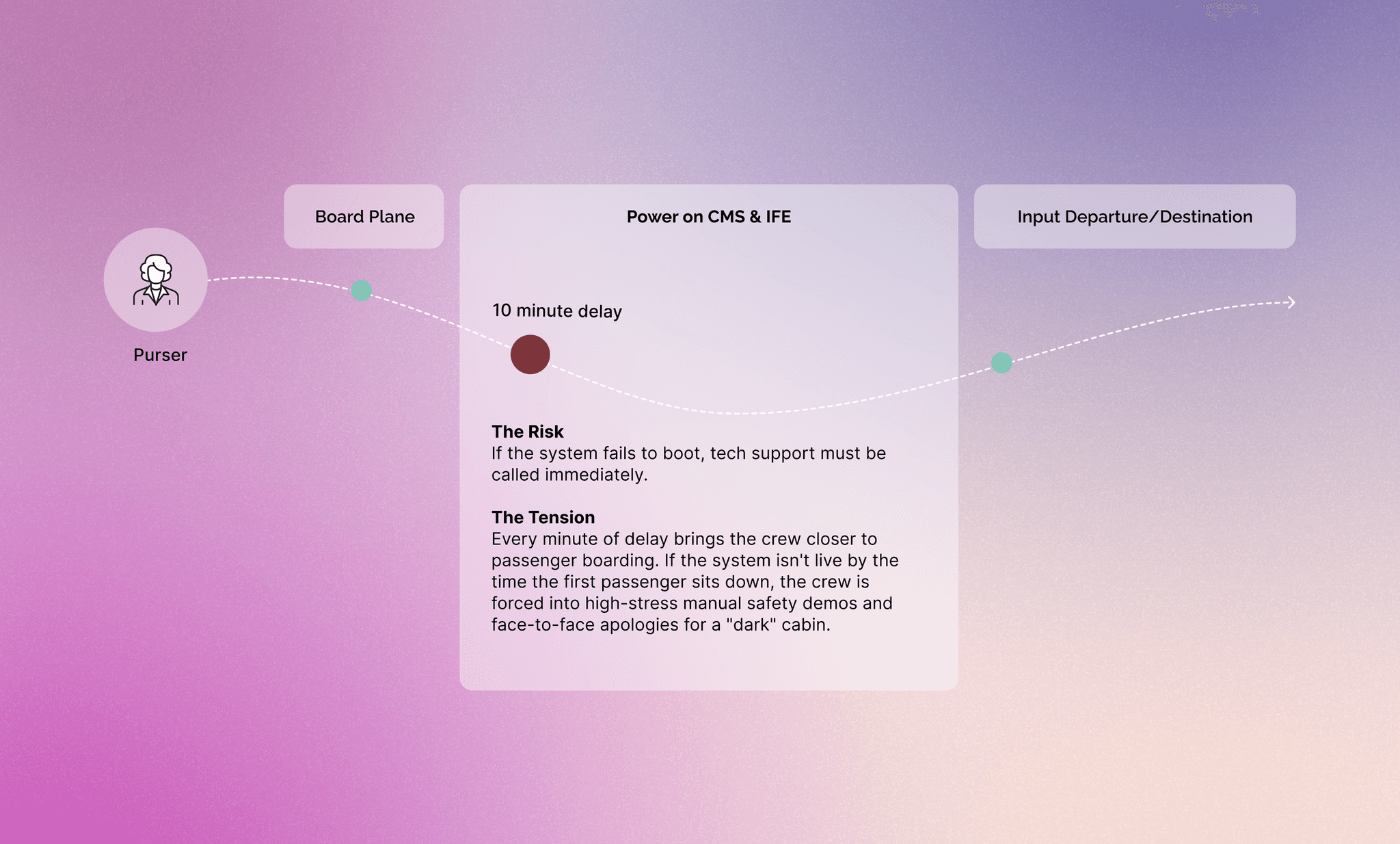
Snapshot of the flight attendant journey before passenger boarding.
The Market Forces, Industry Trends
The Streaming Explosion
Netflix and YouTube were no longer "nice-to-haves." Passengers expected their "Living Room" experience to follow them into the sky.
The BYOD (Bring Your Own Device) Shift: Airlines were questioning the cost of heavy seatback screens when every passenger had a tablet in their bag.
The Connectivity Pivot: Delta’s move toward "Free Wi-Fi" signaled that data was becoming a commodity, not a luxury.
Competitive Benchmarking
Mentioning concepts like Panasonic’s Waterfront showed that the "Connected Cabin" (controlling lights/seat from a phone) was the new gold standard.
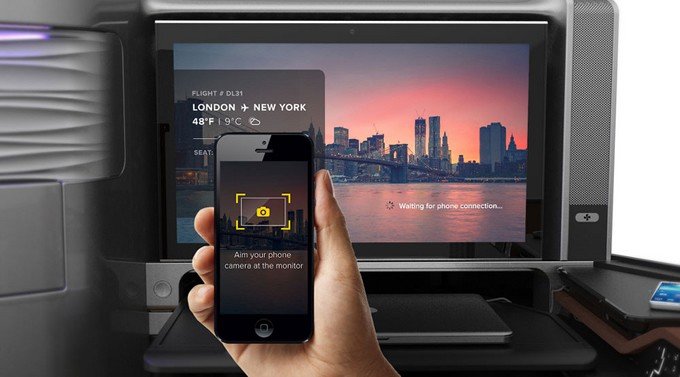
Industry Benchmark | Panasonic’s Waterfront Concept: An exploration of the "Connected Cabin" ecosystem, where the personal device acts as a secondary controller for seat ergonomics, lighting, and service—benchmarked to define Gogo’s future-state productivity capabilities.
Phase 2, Stakeholder Workshop Synthesis
My research revealed that passengers prioritized productivity and personal content, while flight attendants required system reliability. Meanwhile, industry trends were threatening the existence of the seatback screen. I organized two leadership workshops to reconcile these three forces and define Gogo's next big bet."
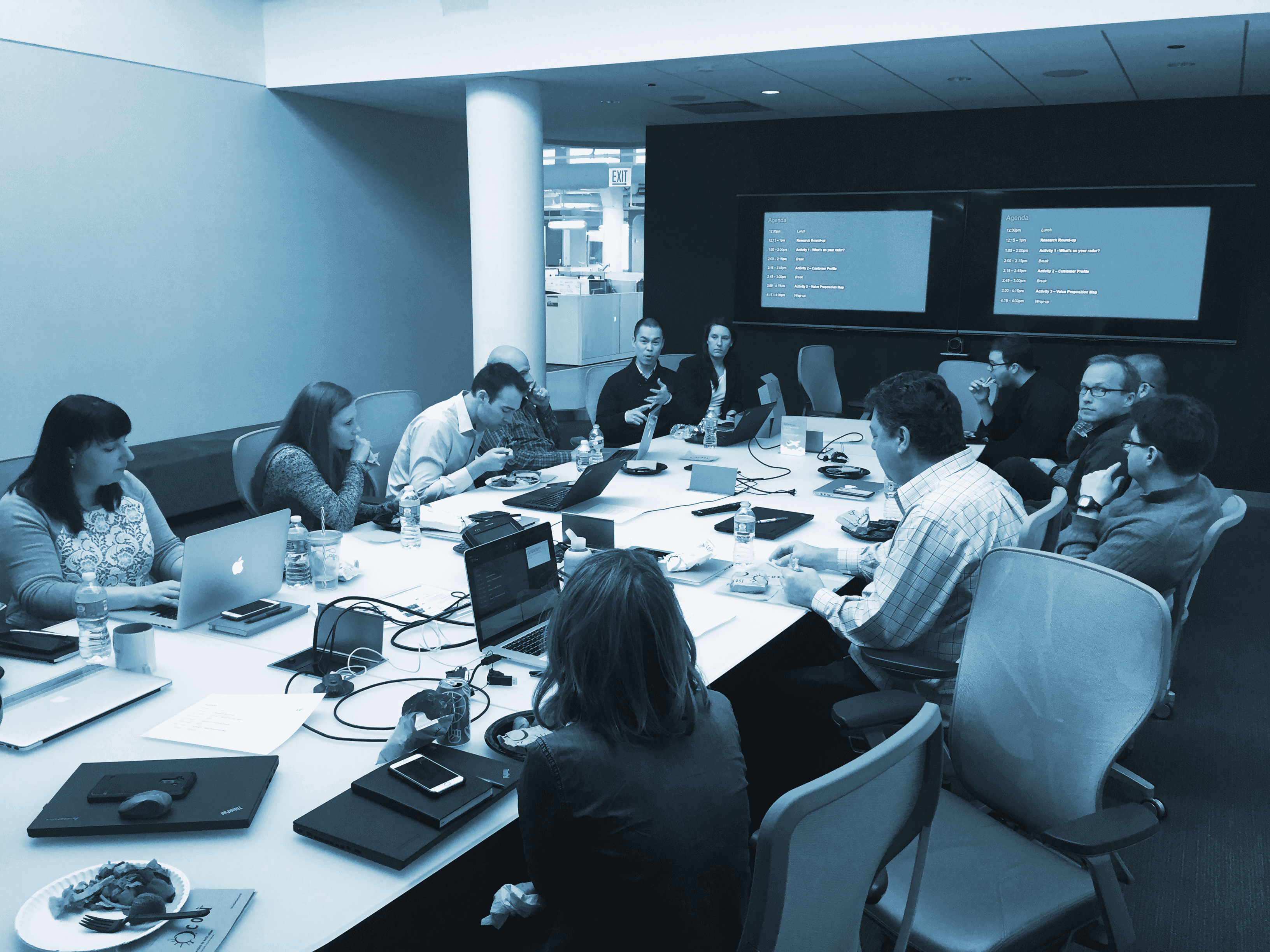
Defining Value with the Value Proposition Canvas - Workshop 1
To move past a "one-size-fits-all" approach, I led the leadership team through a mapping exercise to align our features with the specific needs of three distinct profiles:
The Airline: Focused on operational efficiency, fuel savings (weight reduction), and fleet-wide reliability.
The Premium Passenger: Driven by productivity, seamless device integration, and "time-zone management."
The Economy Passenger: Seeking low-friction, "commitment-free" entertainment as a way to mitigate the boredom of long-haul travel.
Ouput
We generated a high-volume list of features and themes, which I then facilitated a "narrowing" exercise on. We prioritized ideas that balanced passenger desire with airline reality.
Shifting Gears with the Business Model Canvas - Workshop 2
With the top themes prioritized from Workshop 1, I facilitated a high-intensity session to stress-test these ideas for business viability and long-term feasibility.
The Structure
I divided the leadership team into groups, assigning each one of the four previously identified product areas. Using the Business Model Canvas (BMC) and a Roadmap Tool, each team was tasked with forecasting the trajectory of their product over the next few years.
Pitch & Refine: Teams presented their canvases in 15-minute "Share-outs," receiving immediate feedback to refine their value propositions and cost structures.
The Pilot Plan: Beyond just ideation, I required each team to define a "Pilot Plan"—the immediate, tangible steps needed to prove or disprove their business model in the real world.
Evaluate using Core Competencies
A defining moment of the workshop was the final "Leadership Showcase." We evaluated every model against Gogo’s core technical competencies.
The Decision: We deliberately moved away from "fringe" technologies—such as Virtual Reality—which sat too far outside our infrastructure.
The Winner: We doubled down on ideas that leveraged Gogo’s existing strengths in satellite and wireless. This alignment led directly to the green-lighting of Gogo Vision Touch©, ensuring we invested in a product that was not only innovative but technically and commercially grounded.
“We could chase 'shiny' tech like VR, but our competitive edge is in the wireless pipe we’ve already built. Let's double down on making the seatback an extension of the passenger's own ecosystem.”
~ SVP, Head of Commercial
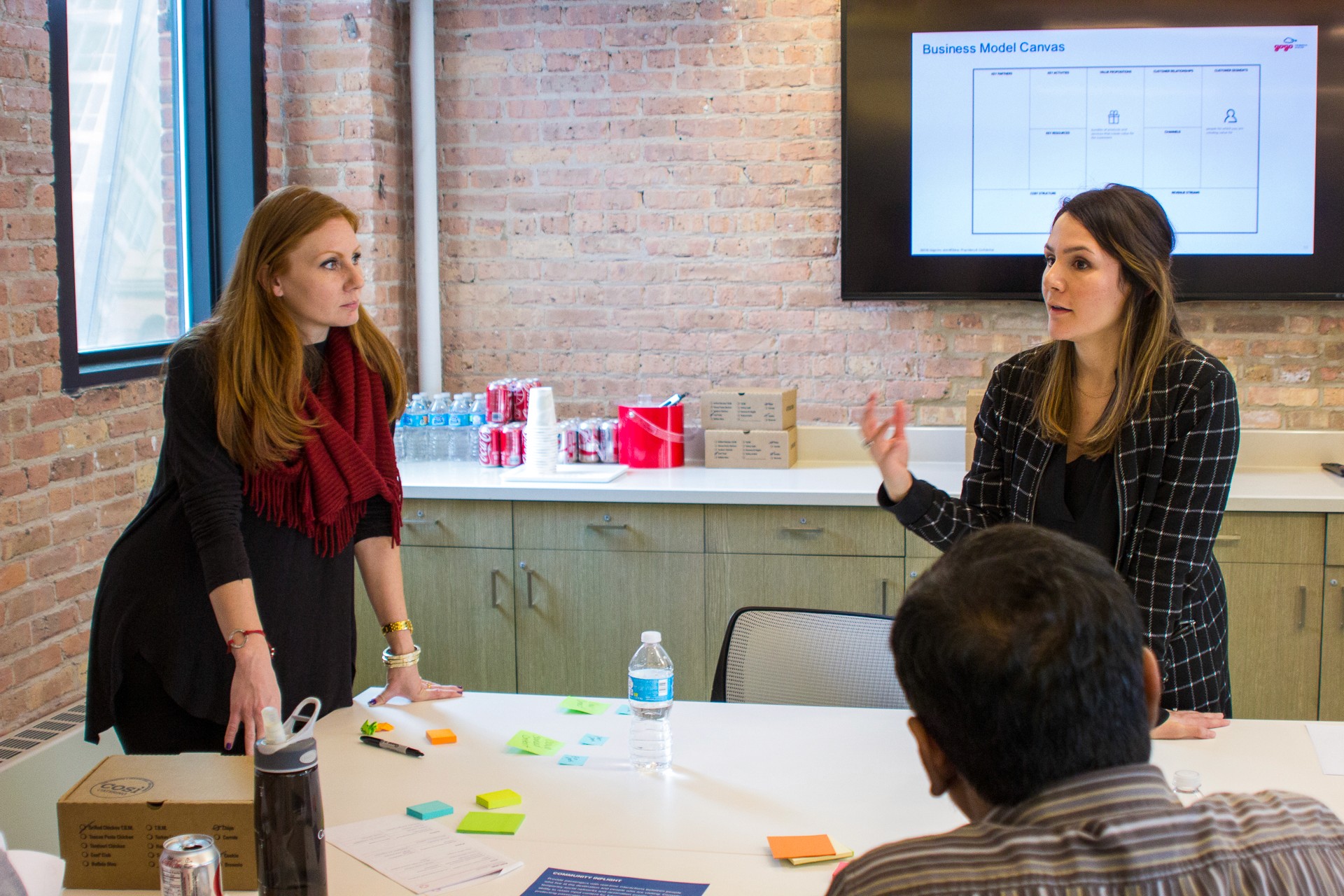
Scaling Gogo's Future
The synthesis of user research, industry trends, and executive alignment led to a two-pronged product strategy: an immediate hardware revolution and a long-term digital roadmap.
1. Immediate Impact: Gogo Vision Touch©
We moved from concept to investment in Gogo Vision Touch©, a wireless seatback solution designed to solve the friction points identified in our research.
For the Airline: The wireless architecture eliminated miles of heavy cabling, resulting in significant fuel savings and reduced aircraft weight.
For the Crew: The system offered granular control, allowing FAs to reset individual seats without disrupting the entire cabin.
For the Passenger: It provided a modern, responsive interface that functioned with the speed of a personal tablet, reducing "system anxiety."
2. The Future Vision: The "Connected Cabin"
Beyond the hardware, I produced a series of storyboards that defined the next three years of Gogo’s digital ecosystem. We benchmarked this vision against industry leaders to ensure Gogo remained a dominant player in the "Living Room in the Sky."
Seamless Productivity: Visualizing a workflow where a passenger could securely access and edit business documents via the seatback, utilizing their phone as a secondary controller.
Environmental Integration: Based on the "Waterfront" concept, we mapped out a future where the IFE system acts as the "remote control" for the passenger’s micro-environment—adjusting lighting, seat position, and meal service directly from the screen.
Reflection
Design as Business Strategy
This project proved that design’s role isn't just about the UI; it’s about facilitating the conversations that define the business model itself.
The Power of "No": By filtering ideas through Gogo’s core competencies during the workshops, we avoided "shiny object syndrome" (like VR) and focused on a buildable, scalable product.
Operational Empathy: Interviewing Flight Attendants was the "missing link" in previous iterations. Designing for the person operating the system is just as important as planning for the person using it.